
The Biggest Mistake Homeowners Make With Large Property Lighting
A lot of homeowners assume a larger property automatically needs more fixtures, brighter fixtures, or both.
That’s usually where things go sideways.
Instead of a clean, elegant nighttime look, the property ends up feeling flat, overly bright, or worse… like a commercial parking lot wearing a tuxedo.
The reality is this: great outdoor lighting is not about flooding a property with light. It’s about guiding the eye, creating balance, and knowing where darkness actually helps the design.
Especially on larger homes and estates throughout the Piedmont Triad, NC, restraint is often what separates professional lighting design from “a bunch of lights in the mulch beds.”
The best way to light a large property without overlighting it is through layered landscape lighting design. Instead of trying to illuminate everything evenly, professional designers prioritize focal points, architectural balance, controlled beam spreads, and intentional contrast. The result feels elegant, functional, and natural rather than harsh or overly bright.
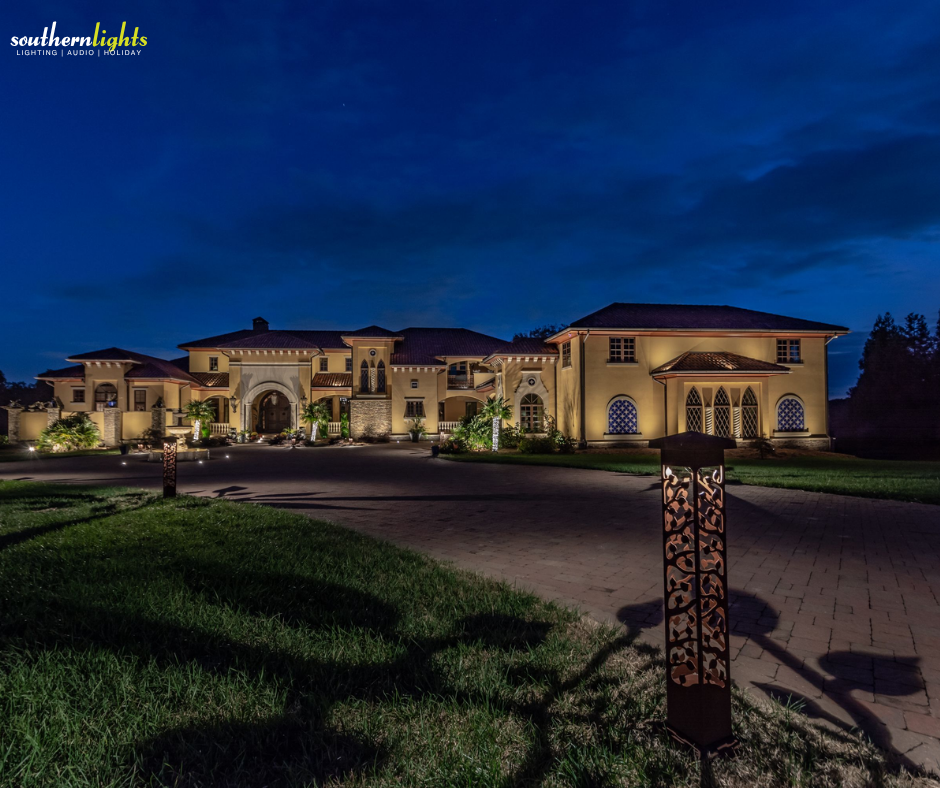
Start With Zones, Not Fixtures
One of the biggest mindset shifts in professional outdoor lighting in the Piedmont Triad is understanding that lighting should be designed in layers and zones.
Not every area of the property needs the same intensity.
A well-designed system typically prioritizes:
- The architecture of the home
- Entry and arrival areas
- Mature trees or focal landscaping
- Walkways and transitions
- Outdoor living spaces
- Select depth elements farther from the home
That last part matters more than most people realize.
Large properties often look smaller at night because homeowners only light the house itself. Proper landscape lighting design creates depth by pulling the eye outward into the property rather than stopping at the walls of the home.
That’s how lighting starts feeling expansive instead of concentrated.
Darkness Is Part of Good Lighting Design
This surprises people all the time.
The goal is not to eliminate darkness.
Professional lighting designers intentionally leave some areas softer or darker to create contrast. Without contrast, everything visually blends together and the eye has nowhere to rest.
Think about high-end restaurants or luxury resorts. They are rarely the brightest environments. They feel inviting because the lighting is controlled and intentional.
The same principle applies to residential outdoor lighting.
On larger properties in Greensboro, Summerfield, Oak Ridge, and throughout the Triad, strategic shadows can actually make the home feel more dramatic and refined.
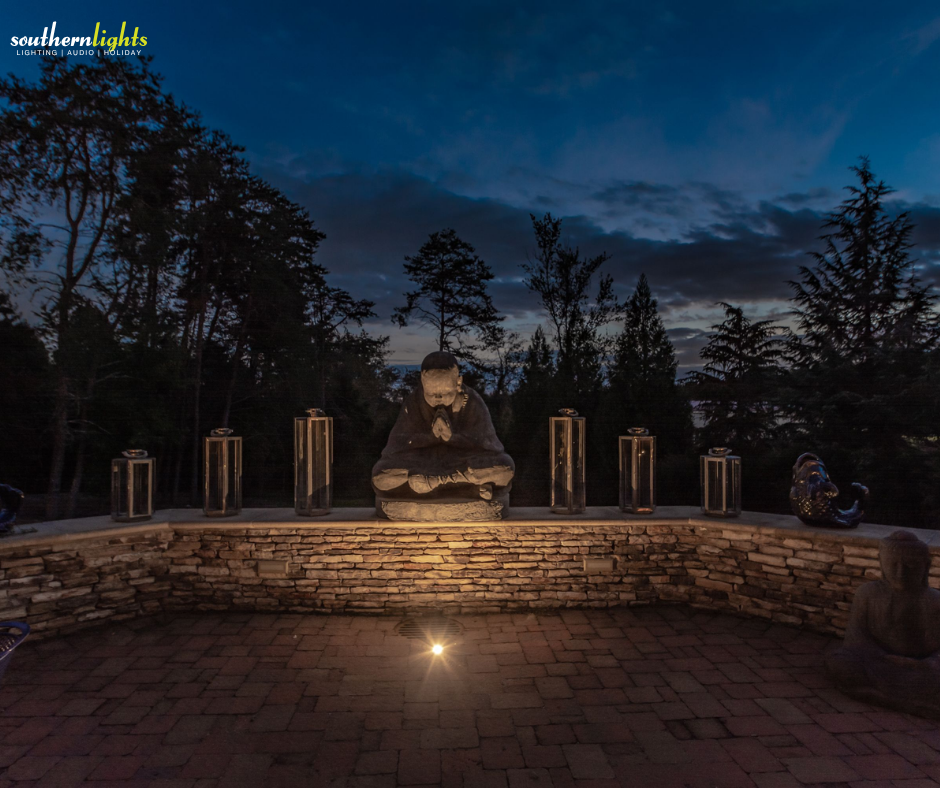
Beam Spread Matters More Than Brightness
One of the fastest ways to overlight a property is using fixtures with the wrong beam spread.
A narrow beam can highlight a tall tree beautifully without blasting light into the neighboring yard.
A wider beam may softly wash a stone façade without creating hotspots.
Professional landscape lighting design is less about “how bright” and more about:
- Beam angle
- Fixture placement
- Layering
- Shielding glare
- Light temperature
- Viewing angles from the home and street
This is also why fixture count alone tells you almost nothing about quality.
Two properties may have the exact same number of fixtures and look completely different at night depending on how they were designed.
Large Properties Need Visual Rhythm
One common mistake is evenly spacing lighting across an entire property.
Ironically, perfectly even lighting usually feels unnatural.
Professional lighting designers create rhythm by alternating focal points, spacing intensity, and varying lighting techniques throughout the property.
For example:
- A softly illuminated tree canopy
- A darker lawn transition
- A warm architectural wash
- A subtle pathway glow
- A highlighted specimen tree deeper in the landscape
That variation keeps the eye moving naturally.
Without it, large properties can feel visually flat and repetitive.
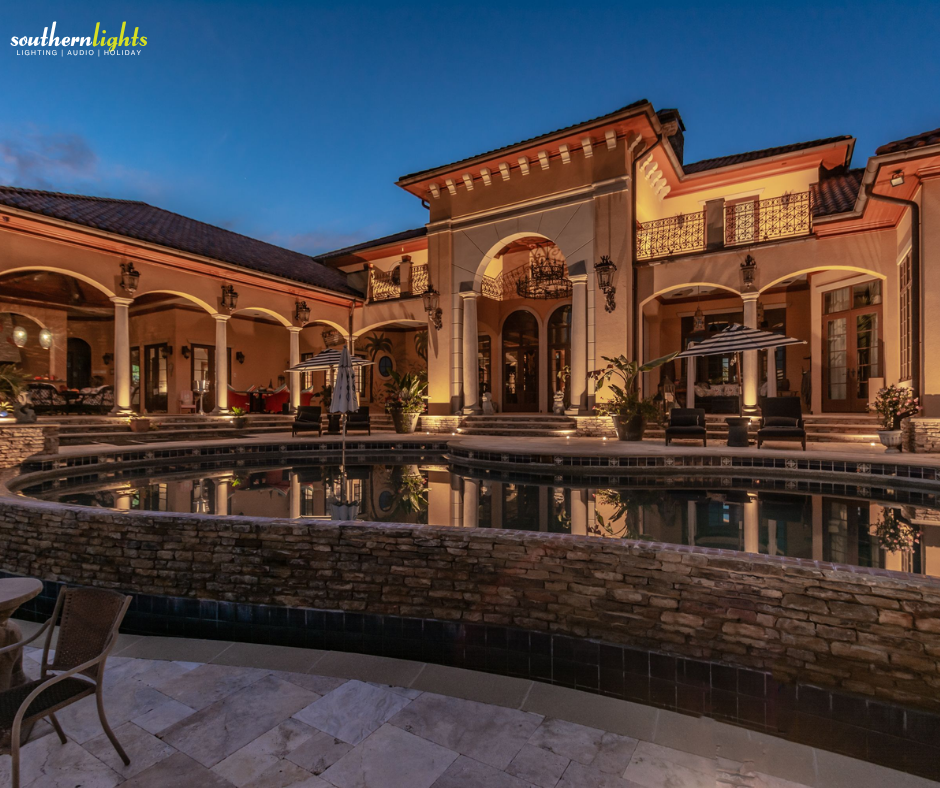
Why Warm Lighting Usually Works Best
Cool white lighting is one of the biggest reasons properties look overlit.
Warmer color temperatures generally create:
- Softer contrast
- Better architectural texture
- More comfortable outdoor spaces
- Less glare
- A more natural nighttime appearance
Most professionally designed residential systems use warm color temperatures specifically because they blend better with landscaping, stone, wood, and architectural materials.
This becomes especially important on larger homes where cooler lighting can quickly feel harsh or sterile.
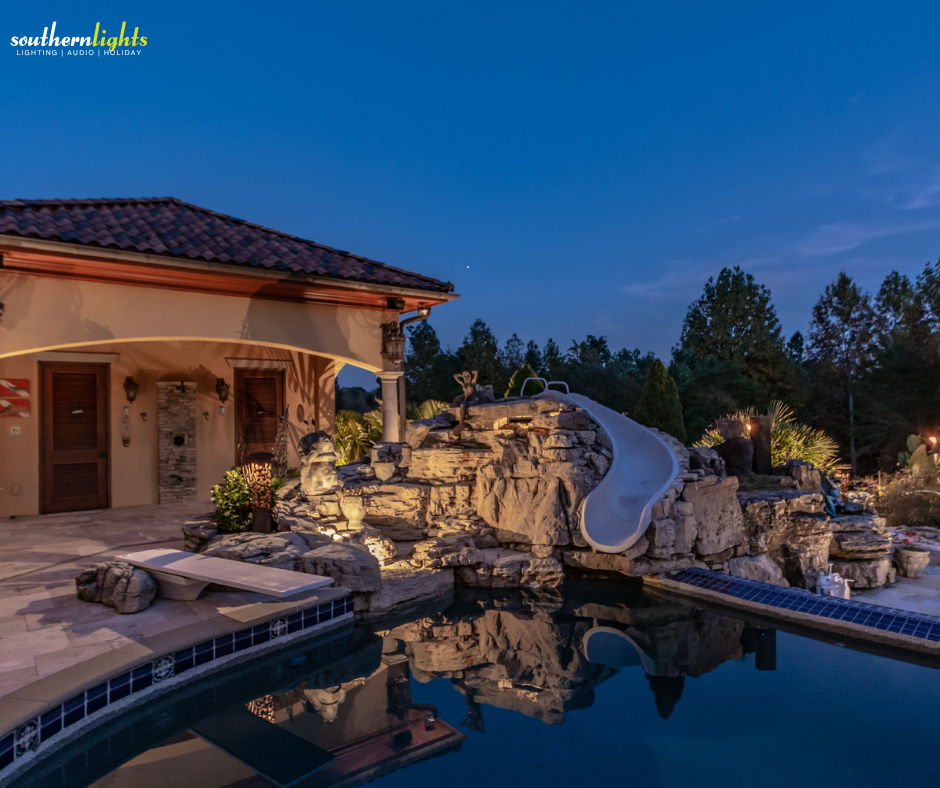
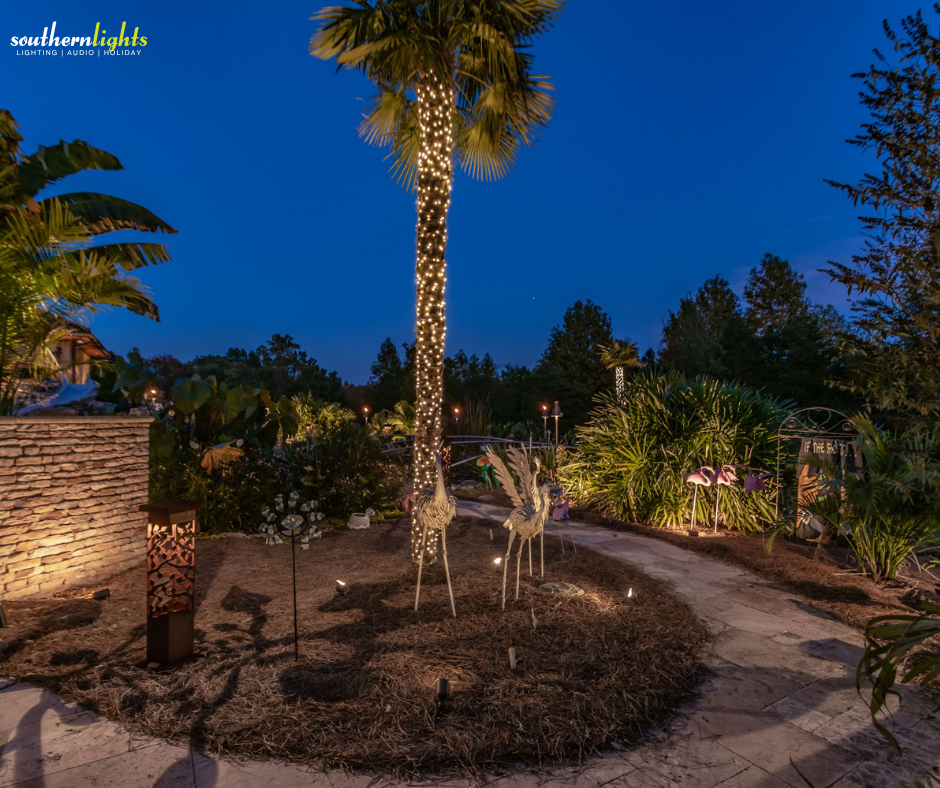
Don’t Forget About Seasonal Lighting
Permanent holiday lighting has also changed how many homeowners approach large-property lighting.
Instead of temporary seasonal systems that overpower the home for a few months each year, modern permanent holiday lighting can integrate cleanly into the architecture while still providing customizable lighting scenes year-round.
When designed correctly, these systems complement the primary landscape lighting design instead of competing with it.
That balance matters.
The goal should always be cohesion — not visual chaos.
Maintenance Matters More on Large Properties
The larger the property, the more noticeable poor maintenance becomes.
A few burned-out fixtures on a small home may go unnoticed.
On a large estate property, inconsistencies become obvious quickly.
That’s why long-term service and adjustability matter just as much as the initial installation. Trees grow. Landscaping changes. Outdoor spaces evolve.
Lighting systems should be designed to evolve with them.
Experience Makes a Difference
Southern Lights is a Piedmont Triad-based outdoor lighting company with over 30 years of experience specializing in custom landscape lighting, permanent holiday lighting, and outdoor audio systems. Known for design-focused installations and long-term service, the company serves homeowners throughout the Triad, Smith Mountain Lake, and surrounding areas.
A professionally designed system should feel intentional from every angle — from the street, from the driveway, from the backyard, and even from inside the home looking out.
That level of balance rarely happens accidentally.
FAQs
How many fixtures does a large property usually need?
There’s no universal number. A properly designed system depends on architecture, landscaping, tree coverage, focal points, and how the property is used at night.
Can outdoor lighting be too bright?
Absolutely. Overlighting creates glare, flattens architectural detail, and often makes properties feel less inviting rather than more dramatic.
What color temperature works best for landscape lighting?
Warm white lighting is usually preferred for residential properties because it feels softer, more natural, and complements landscaping and architecture better.
Is LED landscape lighting bright enough for large properties?
Yes. Modern professional LED systems provide excellent output while allowing for better control, dimming, efficiency, and fixture flexibility.
Does permanent holiday lighting look visible during the daytime?
Professionally installed systems are designed to blend into the roofline and remain minimally visible during the day.
Sometimes the difference between “wow” and “way too much” is simply having the right design approach from the beginning.