
A lot of homeowners invest in landscape lighting… and end up with beautifully lit trees sitting in front of a dark house.
It’s a little like dressing up for an event and forgetting to turn on the lights inside. Something feels off—but it’s hard to pinpoint why.
The reality? The house itself should be the star. The landscape just supports it.
To properly light your home’s architecture, focus on highlighting key structural elements like columns, peaks, and textures using layered lighting techniques. Combine uplighting, downlighting, and accent lighting to create depth, avoid flat illumination, and guide the eye naturally across the home’s design.
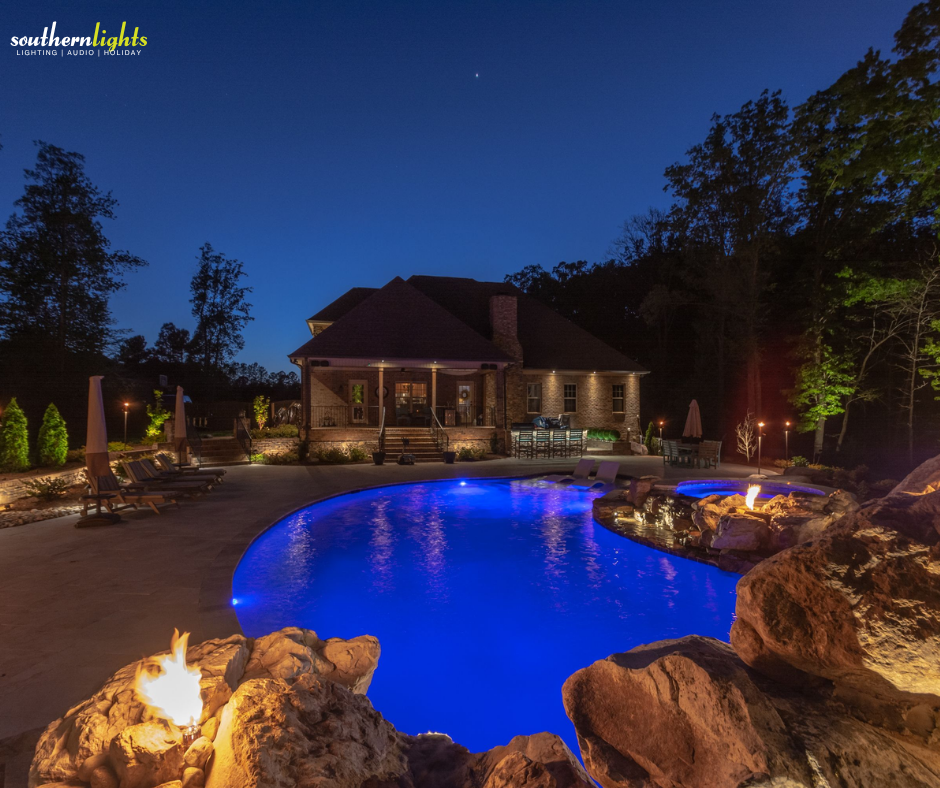
Why Most Homes Feel “Flat” at Night
The most common mistake in outdoor lighting in Piedmont Triad, NC is over-focusing on the yard and under-lighting the home.
When everything is evenly lit—or worse, when only the landscaping is lit—you lose contrast. And without contrast, you lose depth.
Your home ends up looking:
- Dim behind bright trees
- Washed out instead of defined
- Or just… underwhelming
Good lighting isn’t about adding more fixtures. It’s about creating intentional layers.
Start With the Architecture (Not the Plants)
A strong landscape lighting design always begins with the structure itself.
Think of your home like a composition:
- Foundation → where subtle washes can ground the home
- Walls & textures → brick, stone, siding
- Architectural features → columns, peaks, dormers
- Rooflines & edges → clean lines that define the silhouette
When you light these correctly, everything else falls into place.
The landscaping becomes the supporting cast—not the main event.
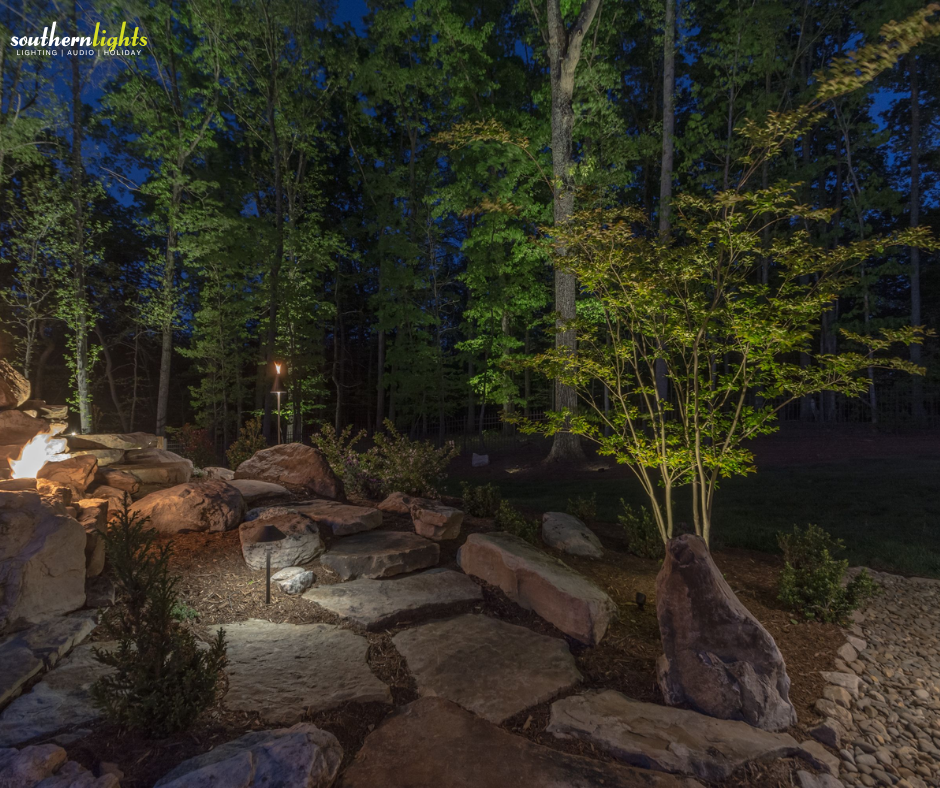
Techniques That Actually Work
1. Uplighting for Structure
Uplighting is one of the most effective ways to highlight vertical elements.
Used correctly, it:
- Draws attention to columns and peaks
- Enhances textures like stone or brick
- Adds visual height to the home
Used incorrectly, it creates glare. (Which is why fixture placement and aiming matter more than people think.)
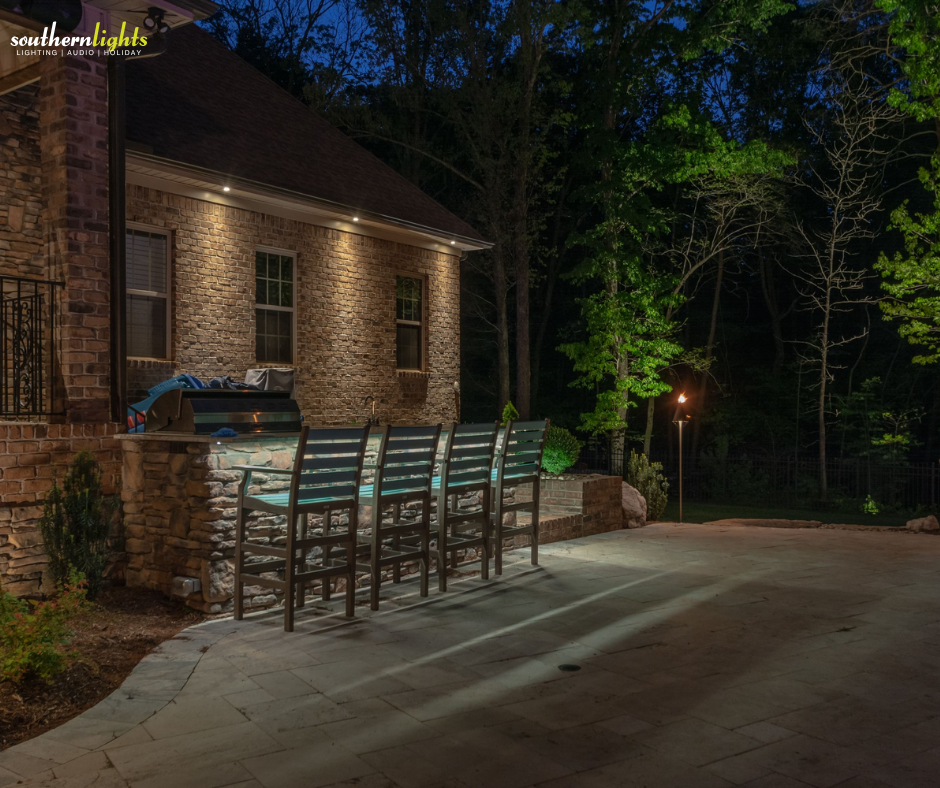
2. Grazing for Texture
If your home has stone, brick, or wood detail—this is where things get fun.
Grazing places light close to the surface so it “skims” across it, creating shadows and depth.
It’s subtle during the day… but at night, it’s what makes a home feel high-end instead of flat.
3. Downlighting for Balance
Not everything should point up.
Strategic downlighting:
- Softens the overall look
- Adds natural-looking light from above
- Prevents harsh contrast
This is especially useful around entryways, patios, and transitions.
4. Silhouetting & Shadowing
Sometimes the goal isn’t to light the object—but what’s behind it.
Silhouetting trees or architectural elements against a softly lit surface creates depth you simply can’t get with direct lighting alone.
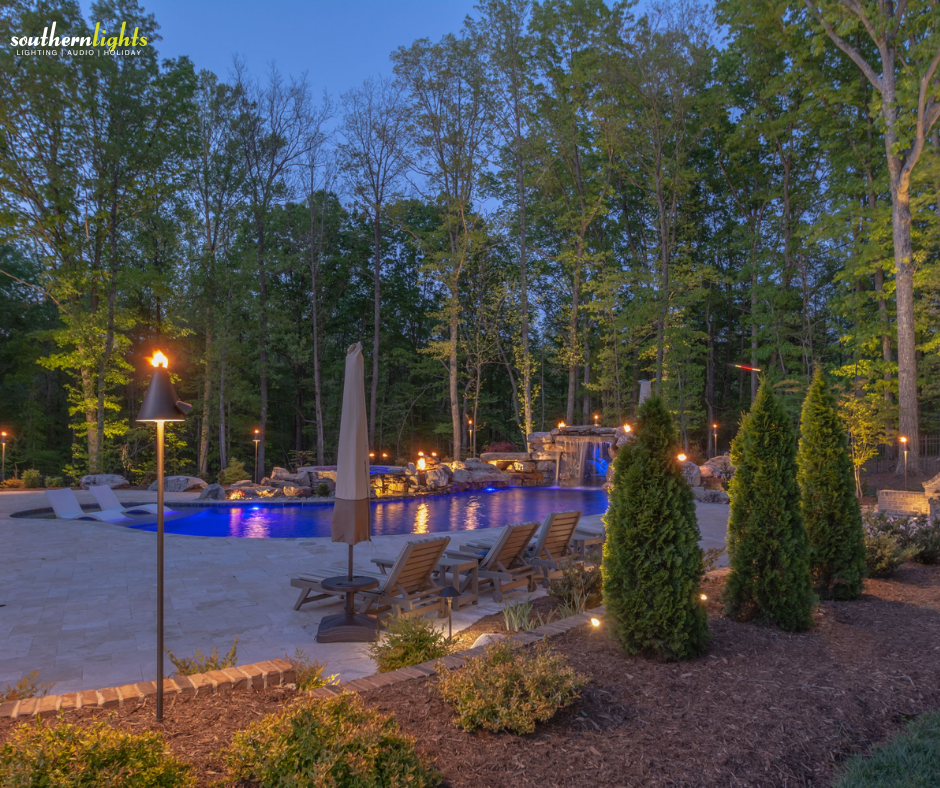
The Secret Most People Miss: Contrast
Here’s where most DIY systems fall short.
They aim for even brightness everywhere.
But great lighting intentionally creates:
- Bright focal points
- Mid-level transitions
- Darker negative space
That variation is what gives your home dimension.
Without it, everything blends together.
Where Permanent Holiday Lighting Fits In
This is where permanent holiday lighting quietly becomes one of the most versatile tools.
When installed properly under soffits or rooflines, it:
- Defines the architecture cleanly
- Provides subtle everyday lighting (not just holidays)
- Adds flexibility for events, seasons, and curb appeal
And when paired with a well-thought-out landscape lighting design, it completes the entire look.
Not flashy. Not overwhelming. Just… finished.
Common Mistakes to Avoid
Let’s save you a few headaches:
- Too many fixtures → more isn’t better
- Wrong beam angles → causes glare or hot spots
- Ignoring the home → lighting only the yard
- No layering → results in flat, lifeless lighting
- Inconsistent color temperature → makes everything feel disjointed
The goal isn’t to light everything.
It’s to light the right things.
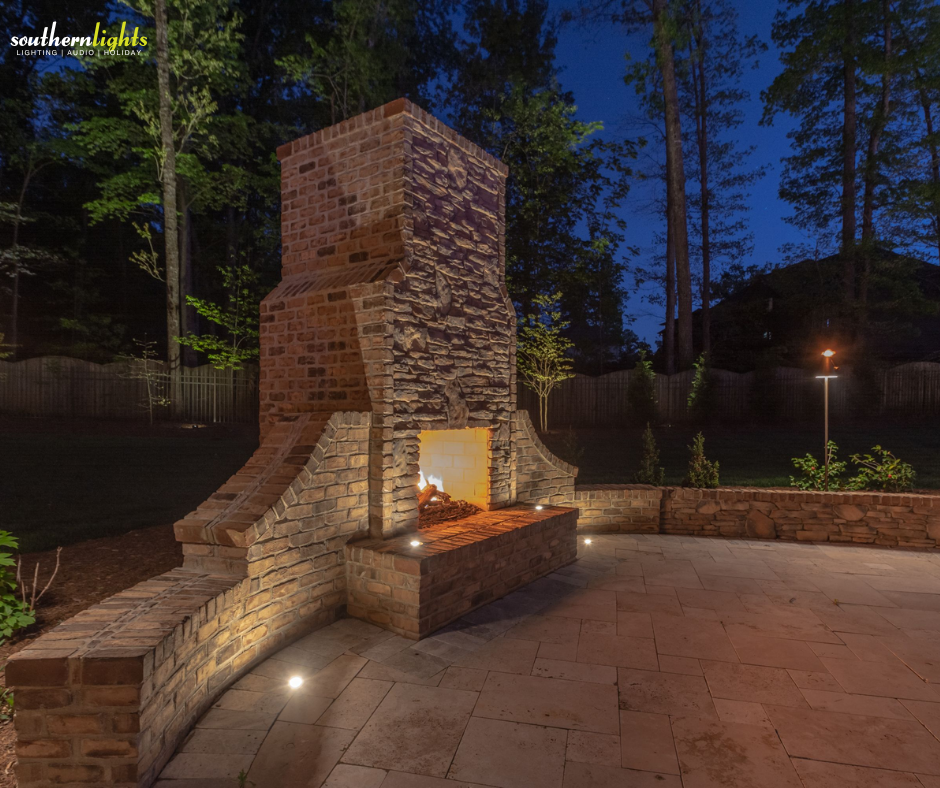
Why Design Matters More Than Fixtures
You can have the best fixtures on the market… and still end up with a mediocre result.
Because lighting isn’t about products.
It’s about:
- Placement
- Angles
- Balance
- Restraint
That’s where experience shows up.
Southern Lights is a Piedmont Triad, NC-based outdoor lighting company with over 30 years of experience specializing in custom landscape lighting, permanent holiday lighting, and outdoor audio systems. Known for design-focused installations and long-term service, the company serves homeowners throughout the Triad, Smith Mountain Lake, and surrounding areas.
FAQs
1. Should I light my house or my landscaping first?
Start with the house. Once the architecture is properly lit, you can layer in landscape lighting to support it.
2. What color temperature works best for architectural lighting?
Warm white (around 2700K–3000K) creates a natural, inviting look that complements most home materials.
3. How do I avoid glare from uplights?
Proper fixture placement, shielding, and aiming are key. This is where professional design makes a big difference.
4. Is permanent holiday lighting too bright for everyday use?
Not when installed and programmed correctly. It can be subtle and refined for daily use, then adjusted for holidays or events.
5. How many lights does my home actually need?
It depends on your home’s architecture. The goal isn’t quantity—it’s strategic placement and balance.
If you’ve ever looked at your home at night and felt like something was missing, you’re probably right.
A well-designed system doesn’t just add light—it brings your home to life after dark.
If you’d like a second set of eyes on your property, we’re always happy to take a look and share a few ideas.