
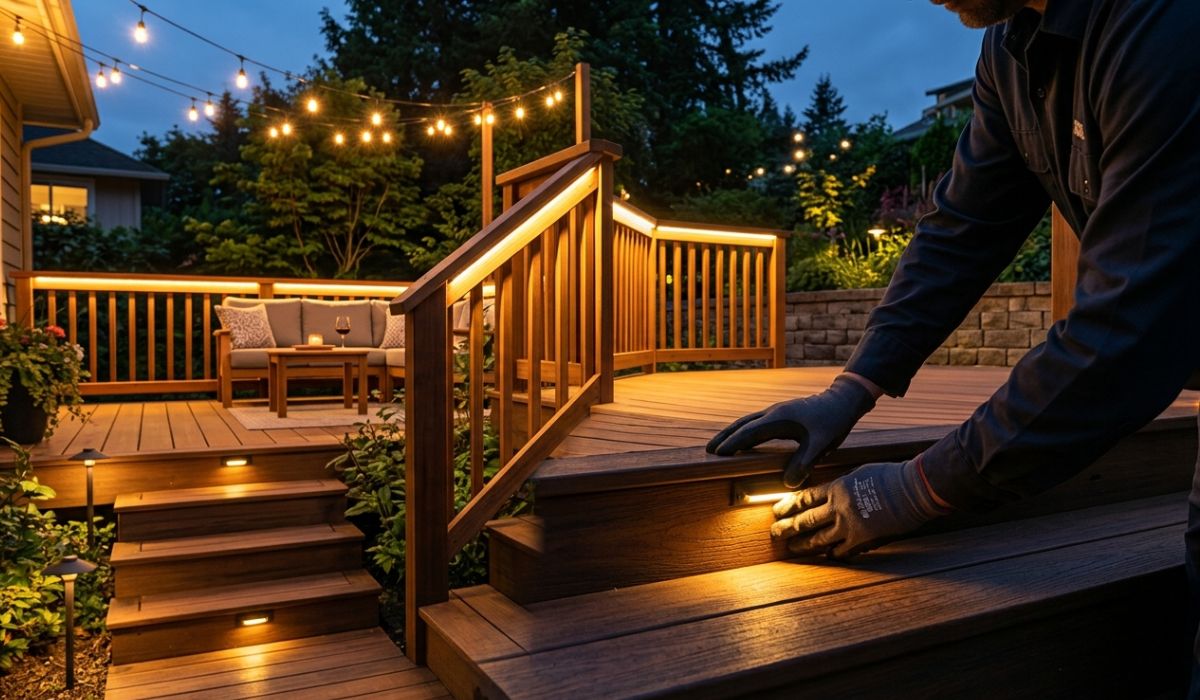
Deck lighting installation near me in North Carolina is a common search for homeowners who want their deck to feel safer, more comfortable, and more useful after sunset.
A deck may be one of the most enjoyable areas of the home during the day, but without the right lighting, stairs become harder to see, seating areas feel unfinished, and the outdoor space may lose its purpose once evening arrives.
Professional deck lighting installation is not just about adding fixtures to posts, railings, or steps. It is about designing light around the way people actually use the space.
A strong lighting plan considers movement, safety, ambiance, brightness, fixture placement, wiring, controls, and long-term performance.
For North Carolina homeowners, that matters even more because decks are often used through a long outdoor season. Spring evenings, summer gatherings, fall weekends, and mild winter nights can all become more enjoyable when the deck is properly lit.
Southern Lights Outdoor Lighting & Audio helps homeowners create outdoor lighting systems that feel intentional, comfortable, and connected to the rest of the property.
Why North Carolina Homeowners Are Searching for Professional Deck Lighting Installation
Many homeowners start thinking about deck lighting after realizing their outdoor space does not work well at night.
The deck may be beautiful during the day, but once the sun sets, the stairs may feel unsafe, the seating area may feel too dark, and the transition from the home to the yard may feel disconnected.
That is why professional deck lighting installation in North Carolina should begin with a clear understanding of how the deck is used.
Some families use the deck for quiet evenings. Others use it for entertaining, grilling, dining, or hosting guests. Some decks connect to patios, pools, pathways, docks, or landscape areas. Each use requires a different lighting approach.
The difference between a basic deck light setup and a professional outdoor deck lighting system is planning. A basic installer may focus on where fixtures can be mounted.
A professional deck lighting contractor focuses on where light is actually needed.
A well-designed deck lighting system can help extend the outdoor season, improve visibility, create a more inviting atmosphere, and make the entire backyard feel more complete.
Why Deck Lighting Should Start With Design, Not Fixtures
Many homeowners begin by asking what type of deck lights they should buy.
That is understandable, but it is not the best first question. The better question is: how should this deck feel and function after dark?
That question changes the entire project. A deck used for relaxing may need soft, warm LED deck lighting near seating areas.
A deck used for entertaining may need more focused lighting near dining and grilling spaces.
A deck with multiple levels may need carefully placed deck step lighting so each stair and landing is easy to see.
A deck connected to a larger yard may need lighting that guides movement from the home to the outdoor living area.
Design-first lighting studies the deck as a living space. It considers how people enter, where they walk, where they sit, where shadows fall, and where glare could become a problem.
It also considers how the lighting looks from inside the home, from the yard, and from nearby patios or pathways.
This is where Southern Lights’ approach is important. The goal is not to place as many fixtures as possible.
The goal is to place the right fixtures in the right areas so the deck feels natural, balanced, and usable.
What the Professional Deck Lighting Installation Process Looks Like
A professional deck lighting installation should feel organized from the first consultation to the final switch-on.
Homeowners should understand what is being designed, why each fixture is being recommended, and how the system will work once installed.
The process usually begins with a design consultation. During this stage, the lighting designer studies the deck layout, surrounding landscape, home architecture, existing outdoor lighting, and homeowner goals.
The designer looks at how people move through the space and identifies the areas that need visibility, comfort, or visual definition.
The next stage is fixture selection and system planning.
This includes choosing the right LED deck lighting fixtures, planning low voltage deck lighting routes, determining transformer needs, and making sure the system is built for outdoor conditions. Fixture count is not the most important factor.
Placement, brightness, color temperature, and wiring quality matter more.
Installation day should focus on clean routing, secure connections, and careful testing.
A professional installer should protect the deck surface, place fixtures with purpose, test each lighting zone, and make adjustments to reduce glare or uneven brightness.
The final switch-on is also important. This is when the homeowner sees how the deck changes at night.
A strong contractor should walk through the system, explain controls, review timer or dimmer settings, and discuss maintenance needs.
This final step helps ensure the lighting works not only on installation day, but for years to come.
The Deck Zones Every Lighting Plan Should Address
A good deck lighting plan should not treat the deck as one single area.
Different parts of the deck serve different purposes, and each zone needs the right type of lighting.
Stairs and landings are usually the highest-priority safety zones. These areas need steady, consistent lighting so people can move confidently from one level to another.
Poorly lit stairs can make a deck feel uncomfortable, especially for guests who are unfamiliar with the layout.
Railings and posts help define the shape of the deck after dark. Deck railing lights and post lights can create structure, outline the perimeter, and add depth to the space.
However, they should be used carefully. Lighting every post with the same brightness can make the deck feel too repetitive or overly bright.
Seating and lounge areas need softer lighting. These spaces should feel calm and comfortable, not harsh or exposed. Warm, indirect lighting often works better than bright fixtures pointed directly into the area.
Dining and grilling zones need more functional light. Homeowners should be able to see food, surfaces, steps, and cooking areas clearly.
The key is balance. Task lighting should support visibility without overpowering the rest of the deck.
Entry and transition points also matter. Doors, landings, walkways, and steps between the house, deck, patio, and yard should be easy to navigate.
These areas are often used the most, so they should not be left in shadow.
Architectural and overhead accents can help frame the space.
These may include subtle lighting on nearby structures, pergolas, walls, or surrounding features. When used correctly, these accents help the deck feel connected to the entire outdoor environment.
Low Voltage LED Deck Lighting vs. Solar and Line Voltage Options
Homeowners often compare low voltage deck lighting, solar deck lights, and line voltage lighting before deciding what to install.
Each option has a role, but for most professional deck lighting projects, low voltage LED systems are the strongest choice.
Low voltage deck lighting is widely used because it offers flexibility, safety, and design control.
It allows fixtures to be placed in key areas such as stairs, railings, posts, seating zones, and pathways.
When installed with the right transformer and wiring plan, it can provide dependable lighting every night.
LED deck lighting is also a strong option because it provides efficient performance and long fixture life.
LEDs are available in different brightness levels and color temperatures, which allows the system to be tailored to the deck’s layout and mood.
For outdoor living spaces, warm white lighting is usually preferred because it feels softer and more natural.
Solar lights may work for decorative accents, but they are usually not the best choice for stairs, railings, and safety-critical areas.
Solar output depends on sunlight exposure, which can be inconsistent under trees, during cloudy weather, or in shaded areas.
In many North Carolina properties, tree canopy and seasonal weather can make solar lighting unreliable for everyday use.
Smart controls, timers, and dimmers can add convenience to a deck lighting system.
The lights can turn on automatically at sunset, dim later in the evening, or connect with other outdoor lighting zones.
However, controls should support the design, not replace it. A poorly placed fixture will still create glare even if it is connected to a smart system.
How North Carolina’s Climate Affects Deck Lighting Performance
Outdoor lighting in North Carolina must be designed for real weather conditions.
Heat, humidity, rain, storms, tree coverage, and seasonal changes can all affect how a deck lighting system performs over time.
Humidity is one of the biggest factors. Poor connections, low-quality fixtures, and weak installation methods can lead to corrosion or performance issues.
A professional installer should use outdoor-rated fixtures, weather-resistant connections, and proper wiring methods to help protect the system.
Summer heat also matters. Decks can absorb and reflect heat, especially around exposed surfaces.
Quality LED fixtures with proper construction are better suited for long-term performance than cheaper products that may not hold up well outdoors.
Storms and seasonal changes can also affect lighting systems. Heavy rain, wind, freeze cycles, and shifting outdoor conditions can expose weaknesses in installation.
A system designed for long-term use should account for weather exposure from the beginning.
Tree canopy and landscaping growth are also important in North Carolina. A deck that receives open light in one season may become more shaded as trees grow or foliage changes.
A professional outdoor lighting company can plan for these changes and recommend adjustments over time.
Common Deck Lighting Mistakes and How Professional Installation Prevents Them
Many deck lighting problems happen because the system is planned around fixtures instead of the space.
These mistakes may not seem obvious at first, but they can become frustrating once the lights are used every evening.
One common mistake is choosing brightness over placement. More light does not always create a better result.
In fact, too much brightness can make the deck feel harsh and uncomfortable. Professional lighting focuses on placing the right amount of light in the right locations.
Another mistake is mixing color temperatures. When some fixtures look warm and others look cool, the deck can feel uneven and unplanned.
A professional deck lighting design keeps the lighting consistent so the space feels connected.
Undersized transformers and overloaded circuits can also create long-term problems. If the system is not planned correctly, performance may suffer as more fixtures are added.
Proper transformer sizing helps the system operate reliably and leaves room for future expansion when needed.
Ignoring transition zones is another common issue. If the deck is lit but the path to the yard, patio, or stairs remains dark, the space can feel disconnected.
Professional outdoor lighting installation considers how the deck connects with the rest of the property.
Poor glare control is also a major concern. A fixture may look attractive during the day but become uncomfortable at night if it shines directly into seating areas or windows.
A professional installer tests the system after dark and adjusts placement or brightness for comfort.
When Deck Lighting Should Be Part of a Complete Outdoor Lighting Plan
Deck lighting often works best when it is part of a complete outdoor lighting plan.
Many decks connect to patios, gardens, walkways, pools, outdoor kitchens, docks, or landscape areas.
If the deck lighting is designed separately from everything else, the outdoor space may feel unfinished.
A complete plan helps the property feel more intentional. Pathway lighting can guide movement from the deck to the yard. Patio lighting can support outdoor dining and gathering areas.
Landscape lighting can add depth beyond the deck. Architectural lighting can highlight the home from the deck view.
Outdoor audio can also complement the lighting system. When lighting and sound are planned together, the deck becomes more than a place to sit. It becomes a true outdoor living space.
Southern Lights provides lighting design services, outdoor light installation, LED lighting system upgrades, maintenance and repairs, holiday lighting, and premium outdoor audio system installation.
For homeowners who want a more complete backyard experience, deck lighting can be one important part of a larger outdoor living plan.
Professional Deck Lighting Installation in North Carolina
Professional deck lighting installation in North Carolina should do more than make a deck visible.
It should make the space safer, more comfortable, and more enjoyable after dark.
The best systems begin with the deck’s layout, the homeowner’s lifestyle, and the way people move through the outdoor space.
A design-first approach considers stairs, railings, seating areas, dining zones, grilling areas, transition points, wiring, brightness, controls, and long-term maintenance.
Each detail matters because deck lighting affects both how the space looks and how people experience it.
Southern Lights Outdoor Lighting & Audio helps North Carolina homeowners create outdoor lighting systems that are designed around the property, not forced onto it.
Whether you need low voltage deck lighting for stairs and railings, LED deck lighting installation for an existing deck, or a complete outdoor lighting plan for your backyard, the right design can make your outdoor space more useful, comfortable, and beautiful.
Schedule Your Deck Lighting Design Consultation With Southern Lights
Your deck should feel just as welcoming at night as it does during the day.
Southern Lights Outdoor Lighting & Audio designs and installs professional deck lighting systems for homeowners across North Carolina, including Greensboro and surrounding communities.
Whether you are planning a new deck lighting system, adding lights to an existing outdoor space, or connecting your deck with a complete landscape and patio lighting plan, the right design starts with a conversation about how you actually use your space.
Contact Southern Lights today to schedule a lighting design consultation for your deck, patio, pathway, landscape, or complete outdoor living area.
FAQs
What does professional deck lighting installation include in North Carolina?
Professional deck lighting installation in North Carolina typically includes a design consultation, fixture planning, low voltage wiring, transformer sizing, weather-resistant connections, and system testing. A professional installer should also plan lighting for stairs, railings, seating areas, dining zones, and transition points. The goal is to create a system that looks intentional and performs reliably.
Where should lights be placed on a deck?
Deck lights should be placed where they improve safety, movement, and comfort. The most important areas are stairs, landings, railings, posts, seating spaces, dining areas, grilling zones, and entry points. A professional deck lighting contractor also considers glare, shadows, wiring routes, and how the lighting looks from inside the home.
How much does deck lighting installation cost?
Deck lighting installation cost depends on the deck size, number of fixtures, wiring complexity, transformer needs, control options, and fixture quality. A smaller single-level deck usually requires fewer components than a large multi-level deck with stairs, railings, and multiple lighting zones. A design consultation is the best way to get an accurate estimate for your property.
Is low voltage deck lighting better than solar lighting?
Low voltage deck lighting is usually more reliable than solar lighting for stairs, railings, and frequently used outdoor living spaces. Solar fixtures depend on sun exposure and may produce inconsistent brightness under trees or during cloudy weather. For safety and consistent performance, professionally installed low voltage lighting is often the stronger choice.
Should deck lights be warm white or cool white?
Warm white deck lights are usually better for residential outdoor living spaces because they create a softer and more comfortable atmosphere. Cool white lighting can feel harsh on decks, patios, and seating areas. Consistent color temperature across the entire deck is also important because mixed tones can make the space feel uneven.
Can deck lighting be added to an existing deck?
Yes, deck lighting can often be added to an existing deck. A professional installer will evaluate wiring access, fixture placement, transformer location, and the structure of the deck before installation. Existing decks often require more careful planning to keep the finished system clean, attractive, and functional.
How long does professionally installed deck lighting last?
Professionally installed LED deck lighting can last for many years when quality fixtures, correct wiring, outdoor-rated connections, and proper transformer sizing are used. Longevity also depends on weather exposure, maintenance, and installation quality. Regular inspections and basic maintenance can help protect performance over time.
Can deck lighting connect with a landscape lighting system?
Yes, deck lighting can connect with landscape lighting, pathway lighting, patio lighting, architectural lighting, and other outdoor lighting zones. This creates a more complete and polished outdoor environment. A connected lighting plan helps the deck feel like part of the whole property instead of a separate outdoor area.
Why hire Southern Lights for deck lighting installation in North Carolina?
Southern Lights Outdoor Lighting & Audio takes a design-first approach to deck lighting installation in North Carolina. Instead of simply adding fixtures, the team considers how the deck is used, where visibility matters, how lighting connects with the rest of the property, and how the system will perform over time. This creates a more thoughtful, comfortable, and reliable outdoor lighting experience.