
The Surprise Most Homeowners Don’t See Coming
You finally get your outdoor lighting installed.
The fixtures looked great during the walkthrough. The renderings looked clean. Everything sounded perfect.
Then nighttime hits… and something feels off.
Maybe the house looks brighter than expected. Maybe the trees disappear into darkness. Maybe one fixture feels like it’s shining directly into your living room window like it’s trying to interrogate someone.
Here’s the reality most homeowners don’t realize:
Outdoor lighting almost always looks different at night than people imagine during the day.
And honestly? That’s completely normal.
The difference between “this looks okay” and “this feels incredible” usually comes down to understanding how lighting behaves after dark — not just where fixtures are placed.
Outdoor lighting looks different at night because darkness changes depth perception, color, contrast, shadows, and brightness. What seems subtle during the day can appear intense at night, while some features virtually disappear without proper beam spread, fixture placement, and layered landscape lighting design. Professional lighting systems are designed specifically for nighttime viewing conditions — not daytime assumptions.
Outdoor Lighting Is Designed for Darkness — Not Daylight
One of the biggest misconceptions in outdoor lighting is assuming a fixture will look the same at night as it does during installation.
It won’t.
During the day, your eyes are processing:
- Natural sunlight
- Reflections
- Color saturation
- Landscape depth
- Architectural detail
At night, all of that changes.
Suddenly:
- Shadows become more dramatic
- Bright spots feel brighter
- Dark gaps become noticeable
- Depth disappears without layering
- Color temperatures become more obvious
That’s why professional outdoor lighting in Greensboro, NC or Smith Mountain Lake isn’t really about the fixtures themselves.
It’s about controlling what your eyes experience after sunset.
Why Some Homes Look “Too Bright” at Night
This is one of the most common issues we see when homeowners try DIY lighting or work with companies that focus more on fixture count than actual design.
More fixtures do not automatically equal better lighting.
In fact, too much lighting often creates:
- Harsh glare
- Flat-looking architecture
- Overexposed walls
- Hot spots
- A commercial or “parking lot” feel
The best landscape lighting design usually feels subtle at first glance.
You notice the mood before you notice the fixtures.
That’s intentional.
A professionally designed system layers light carefully:
- Soft architectural washing
- Controlled tree uplighting
- Gentle pathway illumination
- Selective focal points
- Shadow balance
The goal isn’t brightness.
It’s balance.
Trees, Stone, and Landscaping Behave Differently at Night
This surprises homeowners all the time.
Materials react very differently after dark.
For example:
- White stone reflects significantly more light
- Dark mulch absorbs light
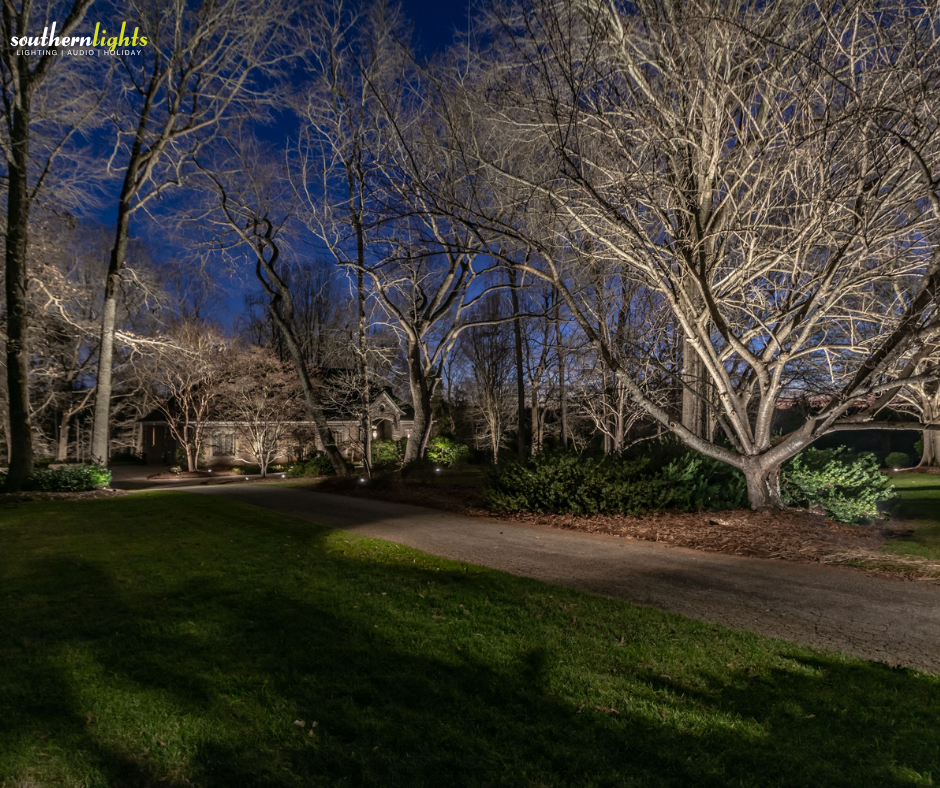
- Trees can look dramatically larger at night
- Water features amplify reflections
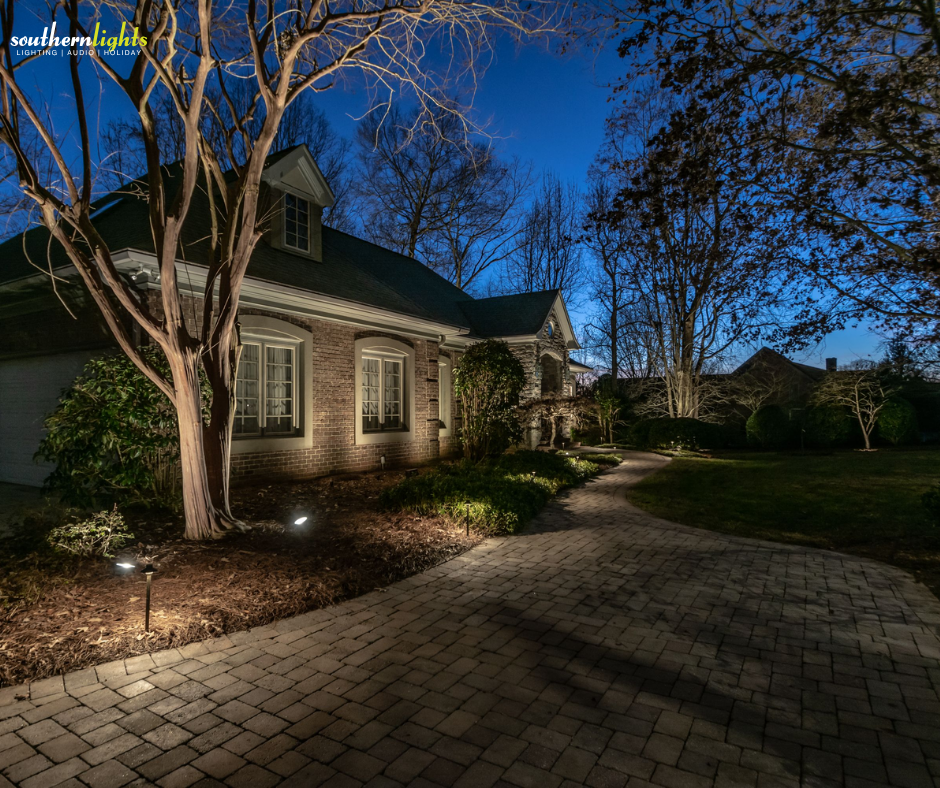
- Brick textures become more pronounced
A lighting plan that looked perfectly balanced on paper may need small nighttime adjustments once the system is live.
That’s why experienced lighting designers almost always make aiming and adjustment tweaks after sunset.
Nighttime is where the real design work happens.
Color Temperature Changes Everything
Another major reason outdoor lighting looks different than expected?
Color temperature.
Warm lighting creates a softer, more inviting feel. Cooler lighting often appears brighter and sharper — even at the same wattage.
Many homeowners accidentally choose lighting that is:
- Too cool
- Too blue
- Too sterile-looking
Professional outdoor lighting systems typically use warmer color temperatures that complement:
- Natural stone
- Brick
- Wood tones
- Landscaping
- Interior lighting glow
That’s one reason professionally designed homes tend to feel calmer and more intentional at night.
Nothing screams “something feels off” quite like lighting that makes your home resemble a gas station canopy.
Beam Spread Matters More Than Most People Think
A fixture’s beam spread dramatically affects how lighting appears after dark.
Two fixtures with identical brightness can look completely different depending on:
- Beam angle
- Fixture placement
- Distance from surfaces
- Aiming height
- Mounting location
This is especially important with:
- Tall trees
- Large homes
- Stone columns
- Outdoor entertaining spaces
Without proper beam control, lighting can create uneven coverage or distracting glare.
That’s why professional landscape lighting design relies heavily on nighttime testing and adjustment — not simply installing fixtures and leaving.
Outdoor Lighting Should Feel Comfortable, Not Distracting
The best outdoor lighting systems often share one thing in common:
You don’t immediately notice why they look good.
The lighting simply feels natural.
You notice:
- The atmosphere
- The depth
- The warmth
- The architectural detail
- The way the home feels more welcoming
That level of restraint usually comes from thoughtful fixture placement, layered design, and experience working with nighttime environments.
Not just installing lights.
Why Experience Matters in Outdoor Lighting Design
Southern Lights is a North Carolina and Virginia-based outdoor lighting company with over 30 years of experience specializing in custom landscape lighting, permanent holiday lighting, and outdoor audio systems. Known for design-focused installations and long-term service, the company serves homeowners throughout the Triad, Smith Mountain Lake, and surrounding areas.
Because outdoor lighting only truly reveals itself after dark, experience matters.
Small details like fixture angle, glare control, beam spread, and layering can completely change how a property feels at night.
And those details are usually invisible during daytime installation.
FAQs
Why does outdoor lighting look brighter at night?
Your eyes adjust differently in darkness, making even moderate lighting appear more intense compared to daylight conditions.
Why do some outdoor lighting systems create glare?
Poor fixture placement, incorrect beam angles, or overly bright bulbs can create uncomfortable glare and hot spots.
Should outdoor lighting be warm or cool?
Most residential landscape lighting looks best with warmer color temperatures because they feel more natural and complement home materials better.
Why are nighttime adjustments important?
Lighting behaves differently after dark, so fixture aiming and brightness often need fine-tuning once the system is operating at night.
Does permanent holiday lighting look different on every house?
Yes. Rooflines, paint colors, soffit depth, and viewing angles all affect how permanent lighting appears after sunset.
If you’ve ever seen outdoor lighting that felt too harsh, uneven, or just “off,” there’s usually a reason behind it.
A well-designed lighting system should feel balanced, comfortable, and intentional after dark — not overpowering.
If you’re considering outdoor lighting in Greensboro, Winston-Salem, Smith Mountain Lake, or surrounding areas, Southern Lights would be happy to walk your property, discuss ideas, and help you understand what will actually look best at night on your specific home.