
Outdoor lighting plays a significant role in both the aesthetic and functional aspects of your home’s exterior.
It enhances curb appeal, provides security, and allows you to enjoy your outdoor spaces long after the sun sets.
When selecting the best lighting for your outdoor spaces, two popular options are LED lighting and traditional lighting (incandescent or halogen).
While both have their merits, there are key differences in terms of energy efficiency, longevity, cost, and overall performance.
In this article, we’ll explore the differences between LED lighting and traditional lighting and help you determine which is the better choice for your outdoor spaces.
Understanding the Basics: LED vs. Traditional Lighting
Before we dive into the comparison, let’s first define what we mean by LED and traditional lighting.
LED Lighting
LED (Light Emitting Diode) lights use semiconductors to convert electricity into light.
They are energy-efficient, long-lasting, and come in a wide variety of shapes, sizes, and colors.
Traditional Lighting
Traditional lighting refers to incandescent and halogen bulbs, which use a filament that heats up to produce light.
These types of bulbs have been around for decades and are commonly used in household lighting.
Both types of lighting have their place, but when it comes to outdoor spaces, it’s essential to understand how they stack up against each other in terms of performance, cost, and environmental impact.
Energy Efficiency: LED Lights Lead the Way
One of the biggest advantages of LED lighting is its energy efficiency.
LED lights consume far less electricity than traditional incandescent or halogen bulbs, making them the more cost-effective choice in the long run.
Why LED Lighting is More Energy-Efficient:
Lower Power Consumption
LEDs use up to 80% less energy than traditional lighting.
This is because they generate light more efficiently and don’t waste as much energy in the form of heat.
Longer Lifespan
LED lights last much longer than traditional bulbs.
An LED bulb can last anywhere from 15,000 to 50,000 hours, while incandescent bulbs typically last around 1,000 hours, and halogen bulbs last around 2,000 hours.
With lower energy usage and longer lifespans, LEDs reduce the need for frequent replacements and lower your overall energy costs.
Brightness and Light Quality: Both Have Their Advantages
Both LED and traditional lighting can provide bright, clear illumination, but they differ in the quality of the light they produce.
LED Lighting
Brightness Control
LEDs are available in various brightness levels, from soft ambient lighting to bright, focused illumination.
They also offer the ability to change the color temperature (from warm to cool light), allowing you to create the perfect ambiance.
Instant Light
LED lights turn on instantly without any warm-up time, providing full brightness right away.
Traditional Lighting:
Warm, Familiar Light
Traditional incandescent and halogen bulbs produce a warm, natural light that many homeowners prefer for certain outdoor spaces, like patios or garden areas.
This is because they produce a softer glow compared to the sometimes “cool” or “harsh” light of LEDs.
Limited Options
Traditional lighting options typically come in standard brightness levels, and they do not offer the same level of flexibility as LEDs in terms of color temperature.
While both types of lighting can illuminate your outdoor areas, LED lights provide more versatility and efficiency, while traditional lighting gives a more classic, softer glow.
Cost: Upfront vs. Long-Term Investment
While LED lights tend to have a higher upfront cost compared to traditional lighting, their long-term savings make them a better investment in the long run.
LED Lighting Costs:
Initial Price
LED lights can be more expensive than incandescent or halogen bulbs, sometimes costing several times more per bulb.
Long-Term Savings
The energy savings from LED lights, combined with their longer lifespan, significantly reduce overall costs.
Over time, the savings on your energy bill will more than compensate for the initial higher price.
Traditional Lighting Costs:
Initial Price
Incandescent and halogen bulbs are typically less expensive upfront, but the long-term costs can add up quickly due to their higher energy consumption and shorter lifespan.
Replacement Costs
Since traditional bulbs burn out faster, you’ll have to replace them more often, adding to the overall cost of maintenance.
In the long term, LED lighting offers much better value for money. Though they require a larger initial investment, their energy savings and longevity make them more economical over time.
Environmental Impact: LEDs Are the Greener Option
When it comes to environmental sustainability, LED lighting is the clear winner. Here’s why:
LED Lighting:
Lower Carbon Footprint
Because they consume less energy, LED lights produce fewer carbon emissions, helping to reduce your overall carbon footprint.
Recyclability
LED lights contain no toxic materials and are 100% recyclable, making them a more environmentally friendly option.
Traditional Lighting:
Higher Energy Consumption
Traditional incandescent and halogen bulbs use significantly more energy, which leads to higher greenhouse gas emissions and a larger carbon footprint.
Waste
Incandescent and halogen bulbs are not as recyclable as LEDs, which means they contribute more waste when disposed of.
If you’re looking to reduce your environmental impact, switching to LED lighting for your outdoor spaces is a smart choice.
Durability and Weather Resistance: LEDs Perform Better Outdoors
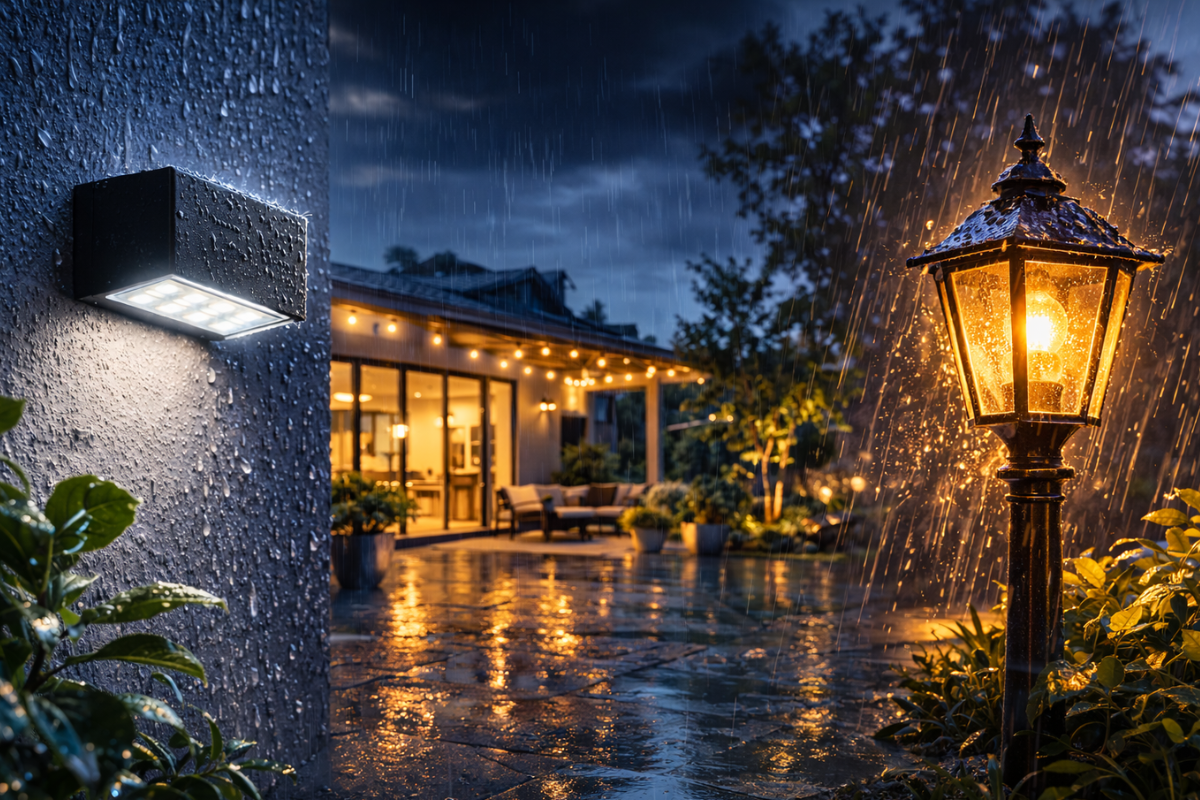
Outdoor lighting is often exposed to harsh weather conditions, including rain, snow, and extreme temperatures.
LED lights are built to withstand these conditions better than traditional bulbs.
LED Lighting:
Weatherproof
Many LED fixtures are rated for outdoor use and can withstand various weather conditions. Some models are even waterproof or resistant to extreme temperatures.
Shock-Resistant
LEDs are durable and resistant to shock, meaning they won’t easily break if dropped or exposed to harsh weather.
Traditional Lighting:
Less Durable
Incandescent and halogen bulbs are more fragile and can easily break if exposed to extreme temperatures or weather conditions.
These bulbs are also more likely to burn out in humid environments.
For outdoor lighting that can withstand the elements and provide consistent performance, LED lighting is the superior choice.
Which is Better for Your Outdoor Spaces?
Ultimately, the choice between LED and traditional lighting depends on your priorities.
If you’re looking for an energy-efficient, long-lasting, and environmentally friendly option, LED lighting is the clear winner.
It provides flexibility, durability, and cost savings in the long term, making it the best choice for most outdoor applications.
However, if you prefer the warm, familiar glow of traditional lighting and don’t mind the extra cost of energy consumption and frequent bulb replacements, traditional lighting may still be a viable option for certain outdoor areas.
Conclusion
When it comes to lighting your outdoor spaces, LED lighting offers numerous advantages over traditional lighting.
From energy efficiency and longevity to environmental impact and versatility, LED lights are the better investment for homeowners looking to illuminate their yards, gardens, and walkways.
At Southern Lights Outdoor Lighting & Audio, we specialize in designing and installing custom lighting solutions tailored to your outdoor needs.
Our expert team can help you choose the best lighting design for your landscape, whether you opt for energy-efficient LED lighting or traditional fixtures.
Let us help you create the perfect outdoor atmosphere for your home.
Frequently Asked Questions
What are the benefits of LED lighting over traditional lighting for outdoor spaces?
LED lighting is more energy-efficient, lasts longer, and has a lower environmental impact than traditional incandescent or halogen bulbs. It also offers more flexibility in terms of brightness and color temperature, making it a versatile choice for outdoor lighting.
Can I use traditional lighting for my outdoor spaces?
Yes, traditional lighting can still be used for outdoor spaces, but it comes with higher energy consumption and more frequent replacements compared to LED lighting. It is best for those who prefer the warm glow and aren’t concerned with energy efficiency.
How much can I save by switching to LED outdoor lighting?
Switching to LED lighting can save up to 80% on your energy bills. Although the initial cost of LED bulbs may be higher, the long lifespan and energy savings make them more economical in the long run.
Are LED lights suitable for all outdoor environments?
Yes, LED lights are suitable for most outdoor environments. They are weatherproof, shock-resistant, and can withstand a variety of weather conditions. Be sure to choose outdoor-rated LED fixtures for best performance.
How long do LED lights last compared to traditional bulbs?
LED lights last significantly longer than traditional bulbs. While incandescent bulbs last around 1,000 hours and halogen bulbs around 2,000 hours, LED lights can last anywhere from 15,000 to 50,000 hours, making them a more durable and cost-effective choice.
How can LED outdoor lighting contribute to sustainability?
LED outdoor lighting is a more sustainable option due to its low energy consumption, which helps reduce your carbon footprint. LEDs use up to 80% less energy than traditional bulbs, produce fewer carbon emissions, and are fully recyclable, making them a greener choice for your outdoor spaces. By switching to LED lighting, you’re not only saving on energy bills but also contributing to environmental preservation.